|
The Lighting Time Table
A Walk Through History & A Display Of Rare Antique
Lighting
|
| |
|
FIXTURE
STYLES FROM THE 1890'S
|
THIS PAGE WAS
CONTINUED FROM HERE
http://antiquesockets.com/lighting-timetable2.html
1894
- INCANDESCENT LIGHTING STYLES
|
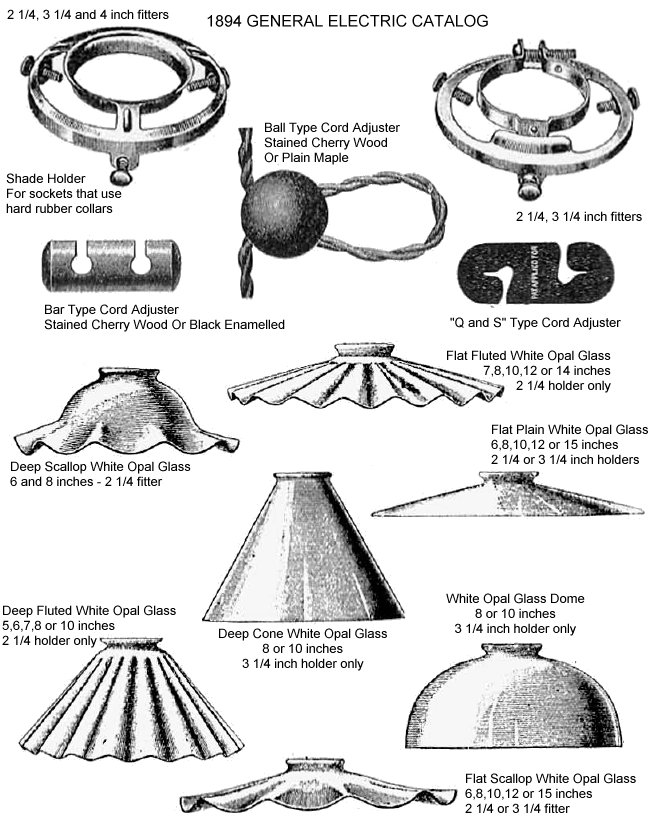
See a demo of the
1894 General Electric Company Catalog
(or if you would like more information about it for trading
or to purchase a full copy of of it click
here)
1895
Bryant and 1896
MESCO catalogs had nothing to add to this time line.
1897
- INCANDESCENT LIGHTING STYLES
|
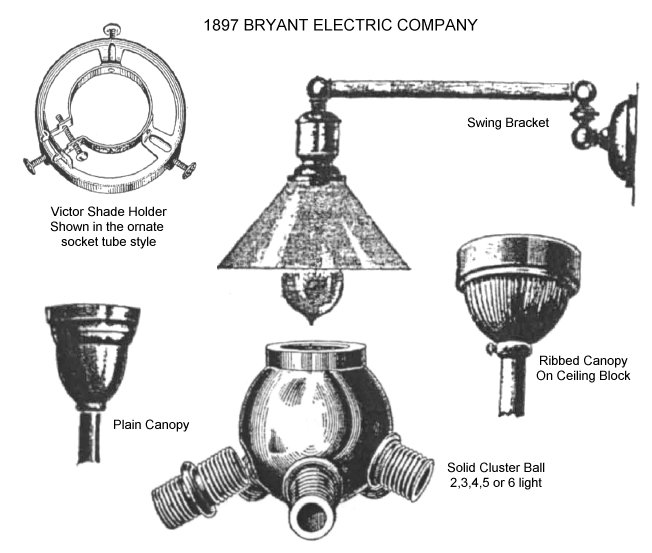
See a demo of the
1897 Bryant Electric Company Catalog
(or if you would like more information about it for trading
or to purchase a full copy of of it click
here)
For more information about Bryant and the Bryant Electric Company
visit our web site link here
and then click the back button back on your browser. To see some
Bryant socket research click
here (page will be updated soon)
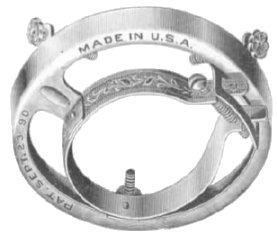
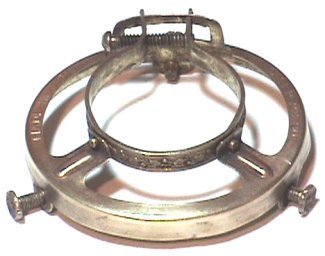
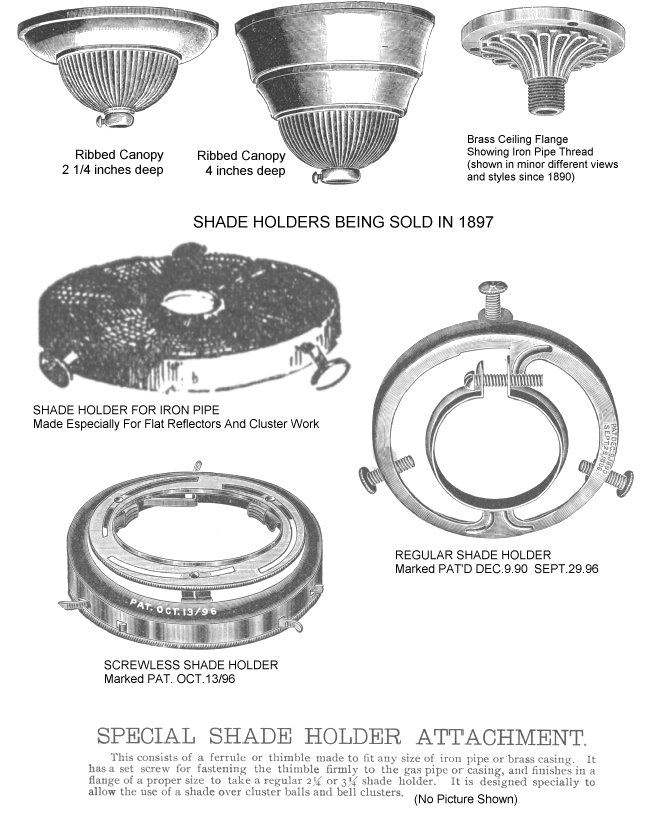
The shade holder above is called the "Victor"
shade holder in the 1897 Bryant catalog, which is also the first
time I have seen it in show up in any distributor or trade catalog.
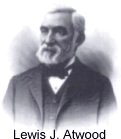
The holder was invented by Lewis J. Atwood early in 1890. (Patent
applied for June 7, 1890 approved September 23, 1890 No. 437,008)
This patent was assigned to the Plume & Atwood Manufacturing
Company of Waterbury Connecticut which was a partnership founded
in the late 1860's called Holmes, Booth and Atwood. This partnership
was between Lewis Atwood, Israel Holmes and John Camp Booth. The
name was changed after a legal dispute over usage of two names (because
of a previous partnership holmes booth & haydens), to Plume
& Atwood in 1871 using the name of the company's treasure David
Scott Plume. Plume & Atwood was an early lamp company that made
burners as well as many brass specialty parts.
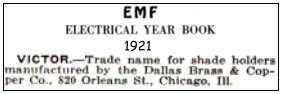 I
do not know how this shade holder got the trade name of "Victor",
but it could of had something to do with the design on the collar
of the early version, or the early "Victor" burner that
was made by Plume & Atwood, or a combination of both. It was
still being called the 'victor' shade holder in 1921 as seen in
the Electrical Year Book as shown to your right. I
do not know how this shade holder got the trade name of "Victor",
but it could of had something to do with the design on the collar
of the early version, or the early "Victor" burner that
was made by Plume & Atwood, or a combination of both. It was
still being called the 'victor' shade holder in 1921 as seen in
the Electrical Year Book as shown to your right.
If you are a researcher, you can search inside of the EMF Electrical
Yearbook on Google by using this
link. On the google page there is "Search in this book"
Type in SHADE-HOLDERS Be sure to include the "-" between
the words shade and holders. Click on page 365 Here is a list of
shade holder manufacturers including Beardslee, Benjamin, Bryant,
X-ray, Arrow, Paiste .. as well as over 30 more. Or if you would
like to download the complete volume from our server click
here. (Other related books that you can download would be the
1906
American Trade Index - This early version is missing some manufacturers
that were around in 1906 like Hubbell for example, so you might
also want to download the 1917-1918
American Trade Index which includes additional manufacturers.
I can not answer why the shade holder being patented in 1890 is
only now showing up in catalogs, BUT this was not the only example
of this as shown below.
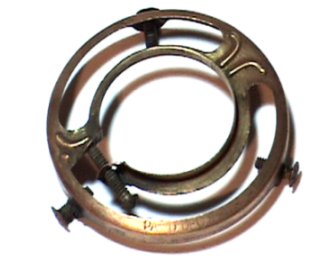
The Standard Shade Holder
In this same year (1897) another shade holder that was patented
December 9th 1890 also started showing up in 1897 catalogs as well.
It was patent no. 442,410
applied for Jan. 20th 1890, invented by Richard J. Ashworth and
assigned to another lamp burner manufacturer (also in waterbury)
"The Waterbury Manufacturing Company" of Waterbury Connecticut.
There was also a new patent for this holder, but only for the ornate
design markings found on it. The patent date was September 29, 1896
applied for on August 3rd 1896. The Inventor of the ornamental design
marking was Frederick S. Chase of Waterbury (patent design no. D26105)
(Note that designs of this type were generally added to provide
strength to the item. The indents and groves added to the holder,
keep it from bending as easily as it would without the design).
While the older style ornate Victor holder is more rare to come
by, the newer non-ornate style Victor out lived all other clamp
on holders that previously existed and that came out after it.
Because of their success, these two clamp on shade holders are the
most common antique holders that you will come across today.
|
VICTOR
SHADE HOLDER
Marked PAT'D SEP.23.90 OR MADE IN U.S.A.
|
THE
STANDARD SHADE HOLDER
Marked PAT'D DEC.9.90 SEPT.29.96
|
|
|
|
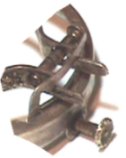
You can easily identify these holders by paying attention to some
simple ID rules
THE OLD ORNATE STYLE VICTOR:
The back rectangle cutout with the collar end points sticking through
it shown on the right
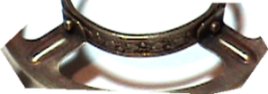 The
ornate collar The
ornate collar
The rivets holding the collar to the holder
The stamped oval design below each rivet.
The mark stamped "MADE IN U.S.A."
The patent date stamped "PAT'D SEP.23.90".
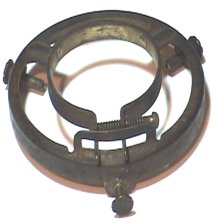
THE NEW PLAIN STYLE VICTOR
The new style Victor shade holder is just like the one above but
with the plain collar (the ornate design has been removed).
Also it began to show up without the patent date.
It was now only marked "MADE IN U.S.A."
Note that this design became the standard shade holder for porcelain
weatherproof sockets and out lived all other shade holders in catalogs
with it's enlarged raised collar version.
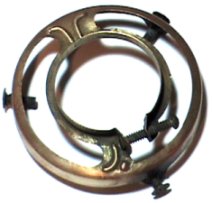 THE
STANDARD SHADE HOLDER THE
STANDARD SHADE HOLDER
The Universal shade holder had a manufacturing advantage over other
shade holders of this time frame because it was manufactured or
stamped out from one single piece of metal. It did not have rivets
and it's one piece design did not cost as much as other holders
to manufacture. A big reason for its success in that because of
it's low cost, it was picked up by General Electric, as well as
virtually all of the catalog distributors as the 'standard' shade
holder.
Other AKA's in catalogs for this holder were: Marshall (Acme shade
holder), Central Electric Company (universal shade holder), Electrical
Appliance Company (regular shade holder), General Electric (clamp
shade holder).
You can ID this
holder easily from the stamped design and the patent dates that
will always be on it of: PAT'D DEC.9.90 SEPT.29.96
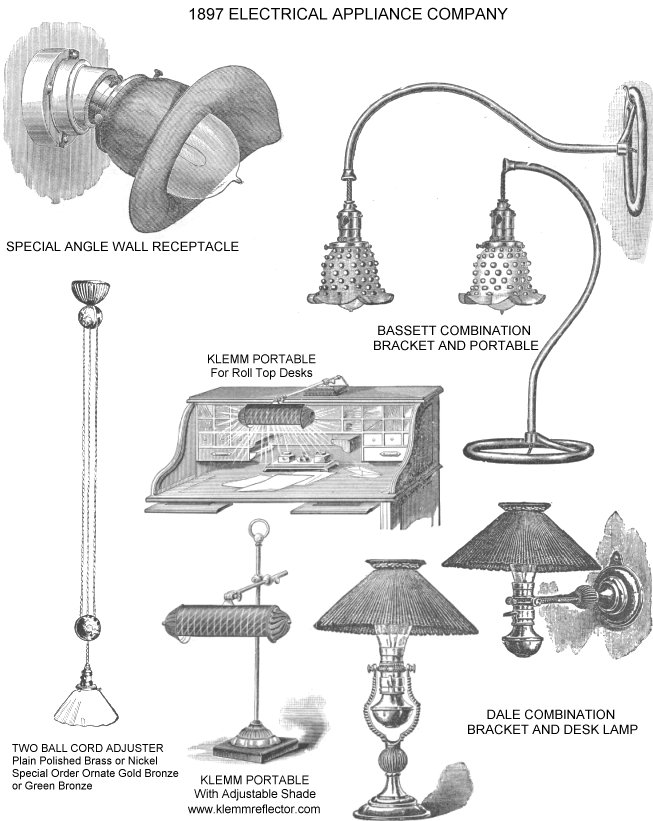
See a demo of the
1897 Electrical Appliance Company Catalog
(or if you would like more information about it for trading
or to purchase a full copy of of it click
here)
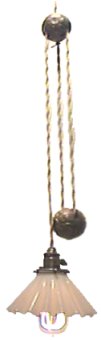
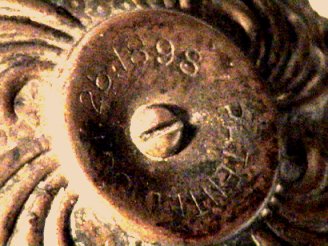 The
drop light hanger shown above was invented by Milton I. Vought of
LA Crosse Wisconsin and was applied for patent on Jul 1, 1897 and
approved on October 25, 1898 (patent no. 613,098). The
drop light hanger shown above was invented by Milton I. Vought of
LA Crosse Wisconsin and was applied for patent on Jul 1, 1897 and
approved on October 25, 1898 (patent no. 613,098).
The 1897 Electrical Appliance catalog shows this invention in two
different styles.
One style as shown using a nipple threaded canopy (as shown in the
catalog picture above, and the other without the canopy where the
wire is attached to a ceiling rosette.
Depending on the users needs, this extension lamp could be used
at any height.
The distance between the balls, as well as the distance from the
top ball to the lamp could be adjusted depending on how much wire
was used.
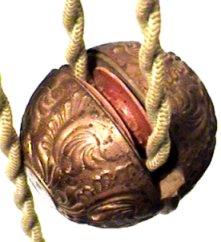 The
user could also easily adjust his own perfect starting or resting
position and then how far he would like to be able to extend the
lamp. The
user could also easily adjust his own perfect starting or resting
position and then how far he would like to be able to extend the
lamp.
The top ball was hollow with only a pulley made out of red Vulcanized
Fiber. The bottom ball also had a pulley as well as an iron weight
inside which made it possible to raise and lower the device.
This was a nice ornate fixture and was picked up by some of the
more exclusive lamp catalogs. While it is unknown if Vulcanized
Fiber was still being used for the pulleys, this fixture style was
still being sold in the R. Williamson catalog of 1909.
In the 1909 catalog pictures of the fixture, it is shown with the
same two styles here (canopy and rosette) but using newer sockets
and with shades of that time period.
This fixture is all original including a 7 inch (deep fluted) white
opal glass shade. It also features a two piece ceiling rosette as
well as pre-1900 short ornate socket with a Thomson-Houston base
and Edison adapter. It also includes a looped filament Edison based
bulb. It is priced at 1850.00. If you are interested in this item
you can contact
me.
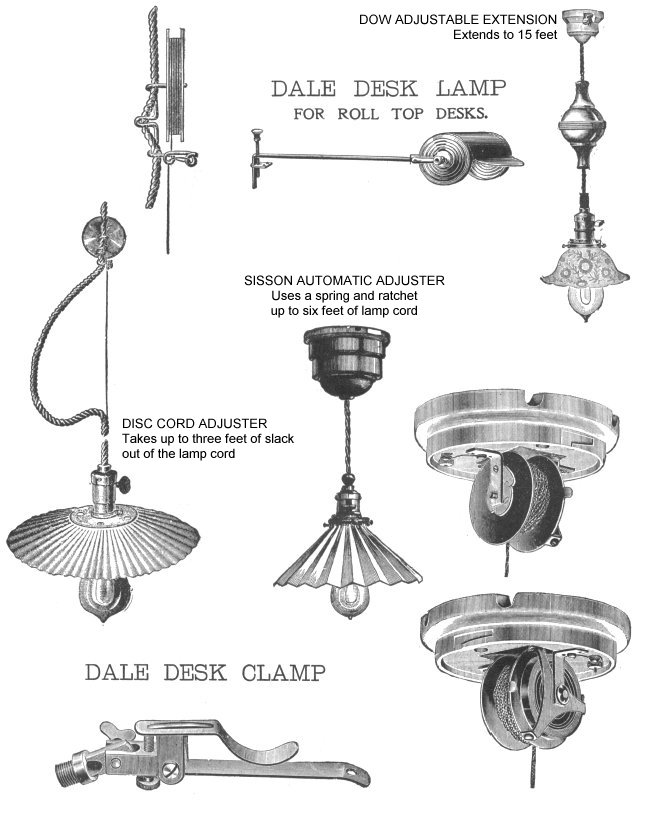
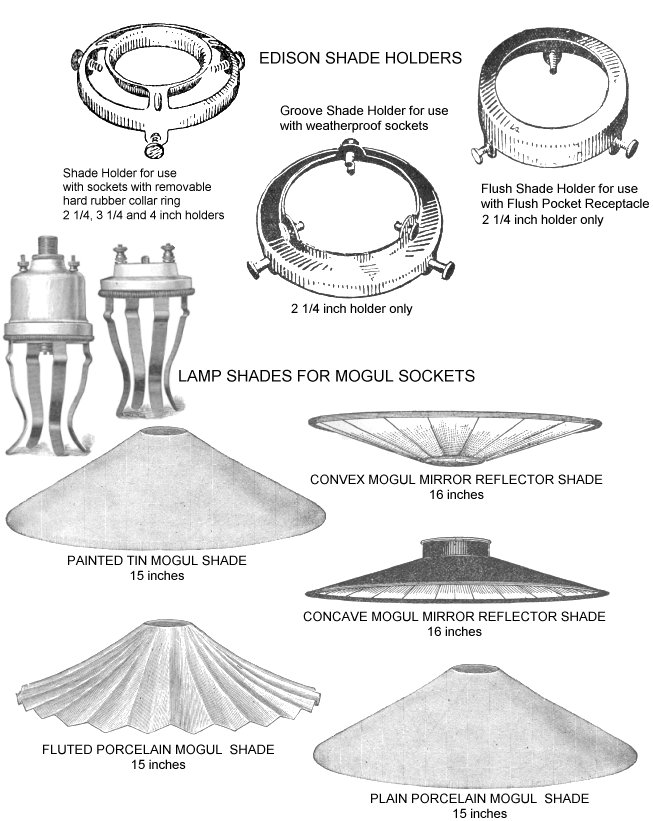
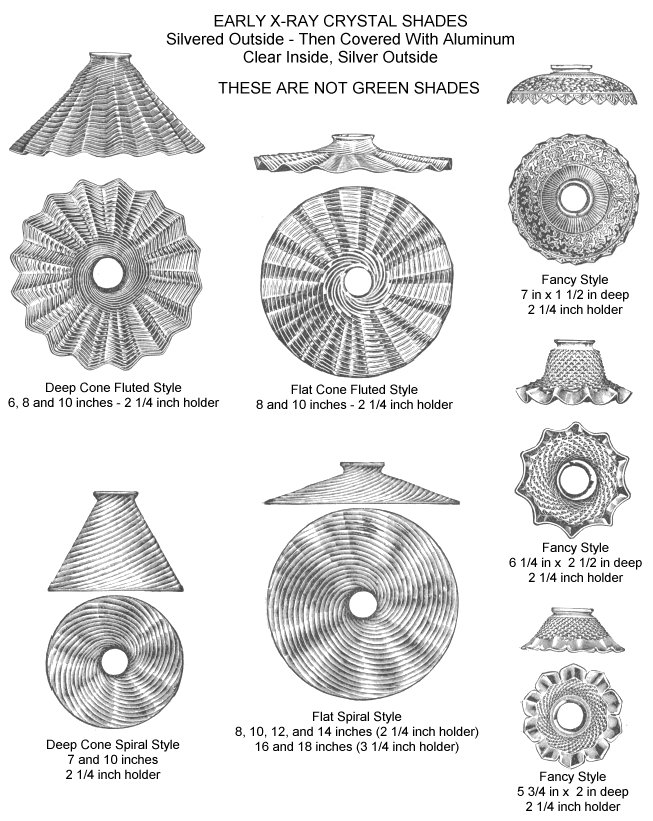
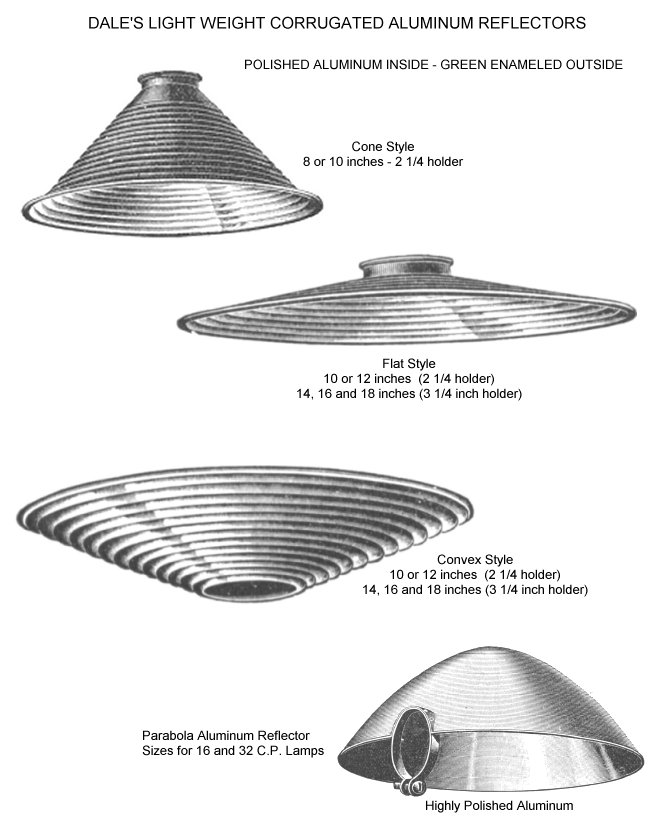
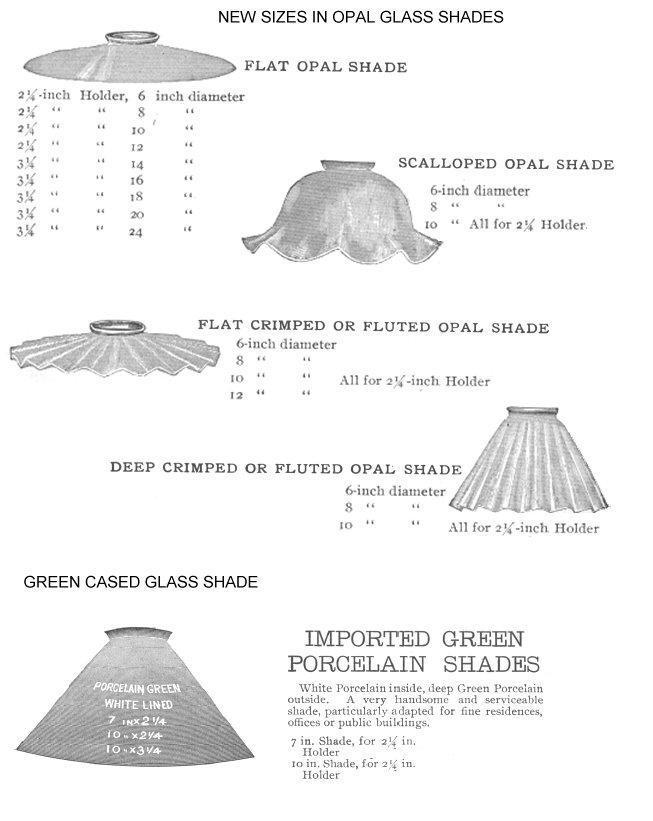
For more more fixtures, brackets, portable lamps and newel post
lamp designs sold in the 1897 Electrical Appliance Company catalog
click
here (22.8 megs) and then back on your browser.
See a demo of the
1897 Electrical Appliance Company Catalog
(or if you would like more information about it for trading
or to purchase a full copy of of it click
here)
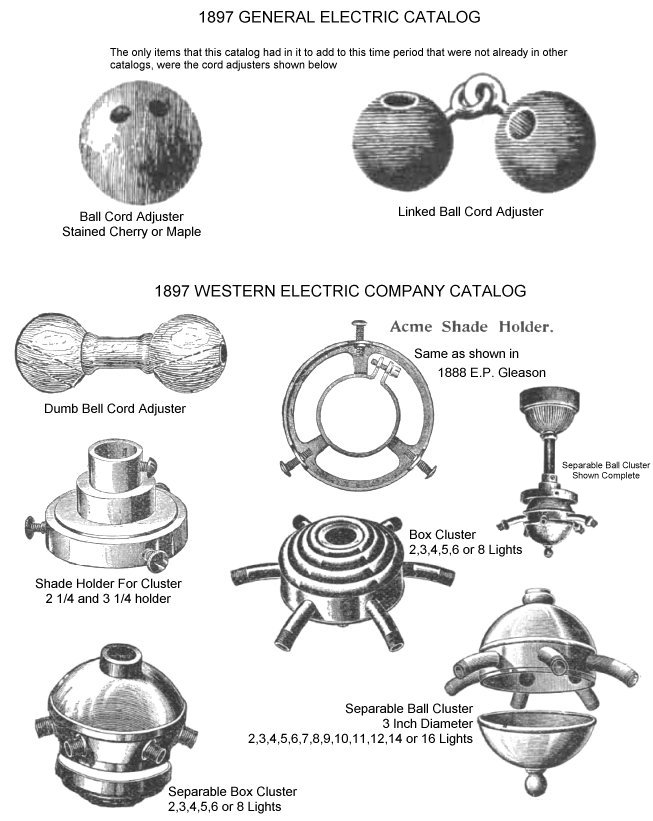
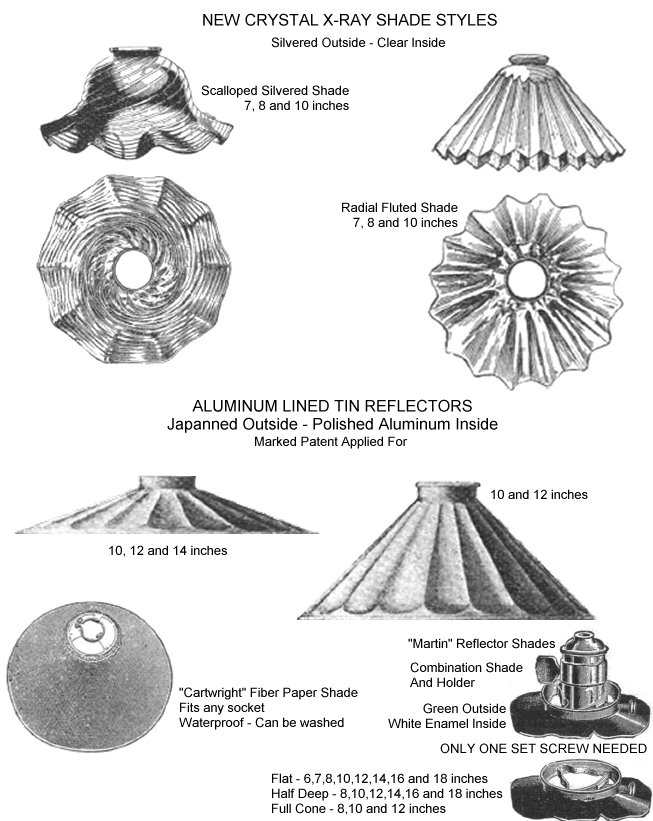
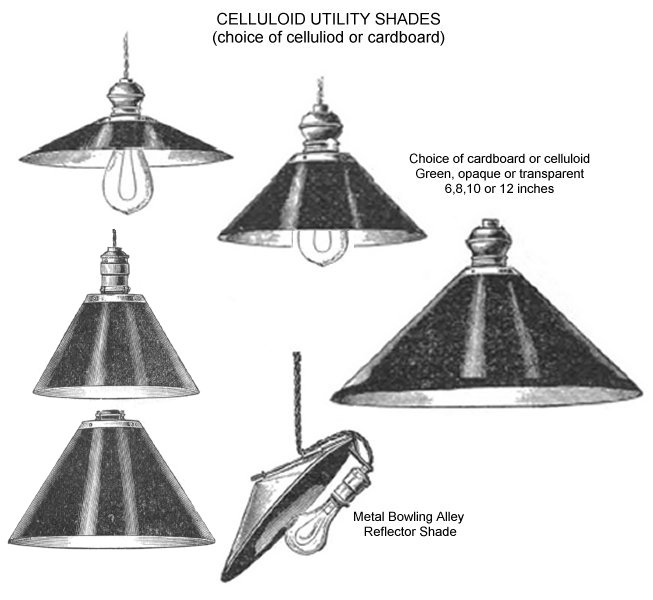
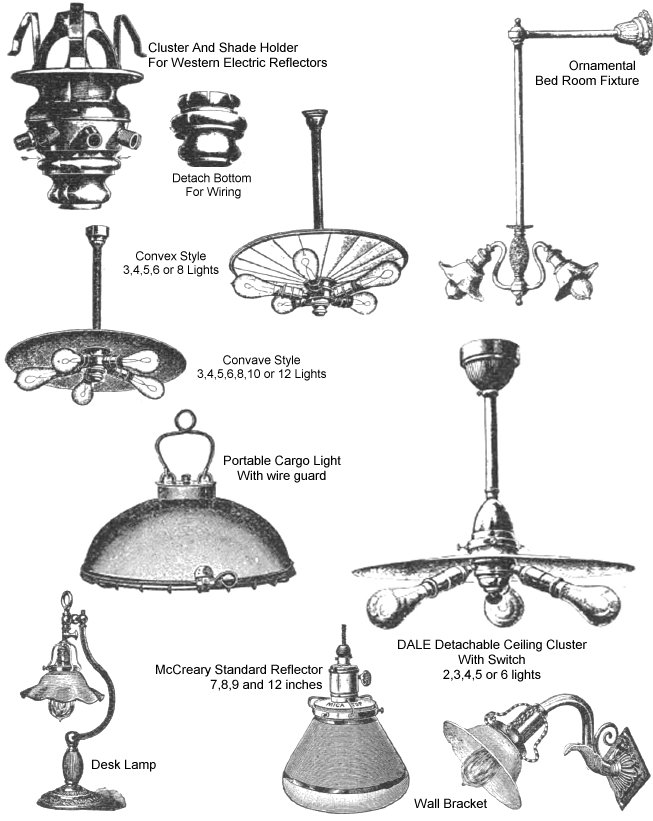
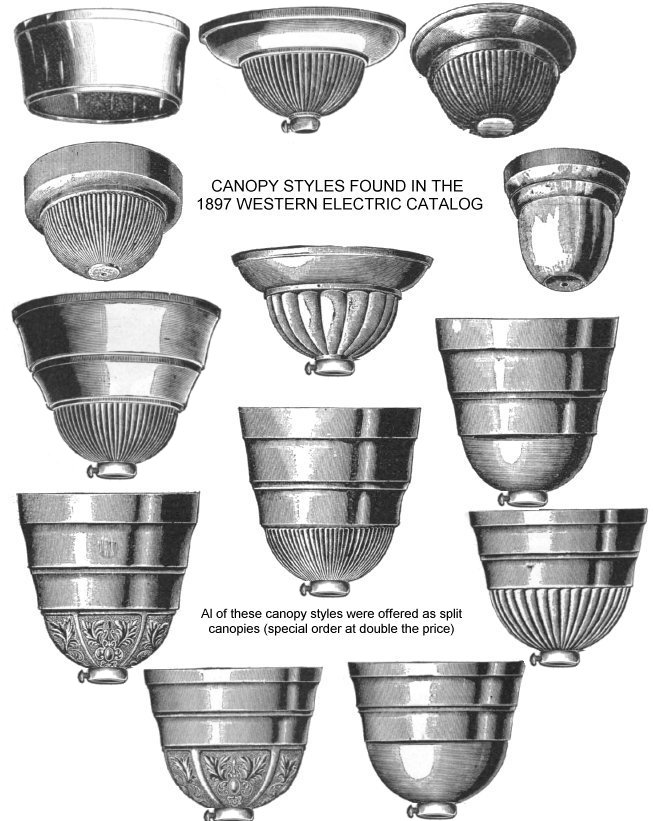
For more more fixtures, brackets, portable lamps and newel post
lamp designs sold in the 1897 Electrical Appliance Company catalog
click
here (22.3 megs) and then back on your browser.
See a demo of the
1897 General Electric Company Catalog
(or if you would like more information about it for trading
or to purchase a full copy of of it click
here)
See a demo of the
1897 Western Electric Company Catalog
(or if you would like more information about it for trading
or to purchase a full copy of of it click
here)
1898
- INCANDESCENT LIGHTING STYLES
|
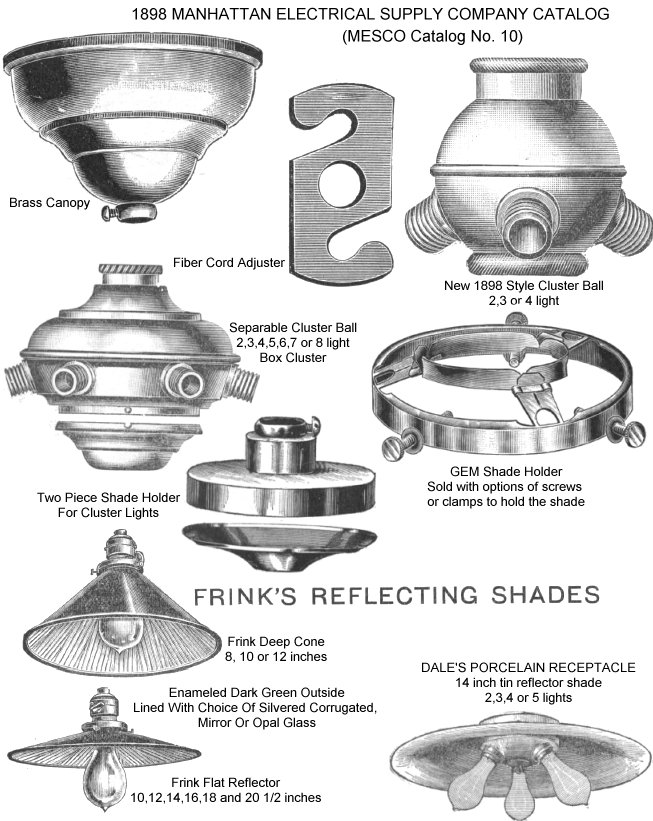
Note: The 1898
Western Electric catalog (bad copy) also added these and other
new Frink styles.
Also see the bottom
of this page for some of the styles found in the 1899 Frink
catalog.
Or a small write up on Frink and Wheeler here.
See a demo of the
1898 Manhattan Electrical Supply Company Catalog
(or if you would like more information about it for trading
or to purchase a full copy of of it click
here)
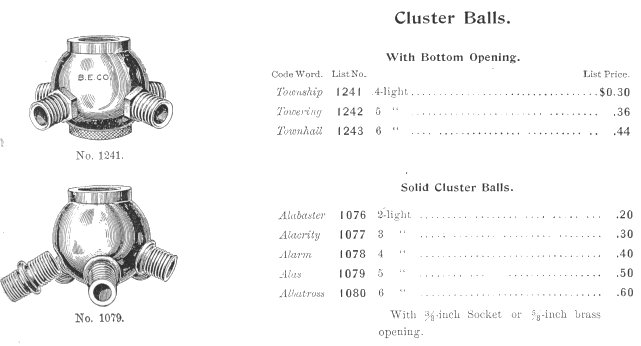
The new cluster ball with the bottom opening that shows up above
in the 1898 MESCO catalog, now began being offered in other manufacturer
catalogs as well. Many times the cluster is shown side by side with
the older closed style as in post 1899
Bryant catalogs (shown below).
1899
- INCANDESCENT LIGHTING STYLES
|
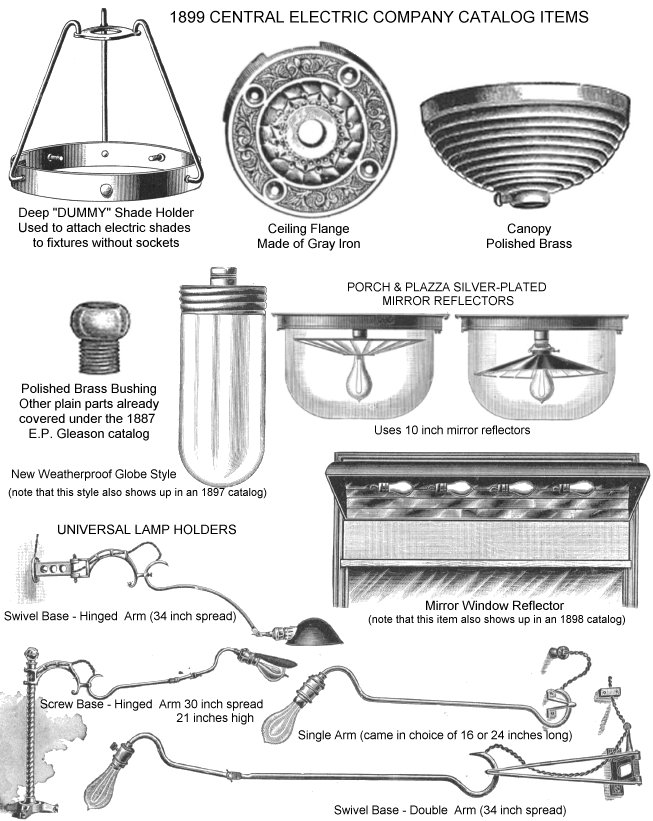
See a demo of the
1899 Central Electric Company Catalog
(or if you would like more information about it for trading
or to purchase a full copy of of it click
here)
1899
- I. P. FRINK CATALOG ITEMS
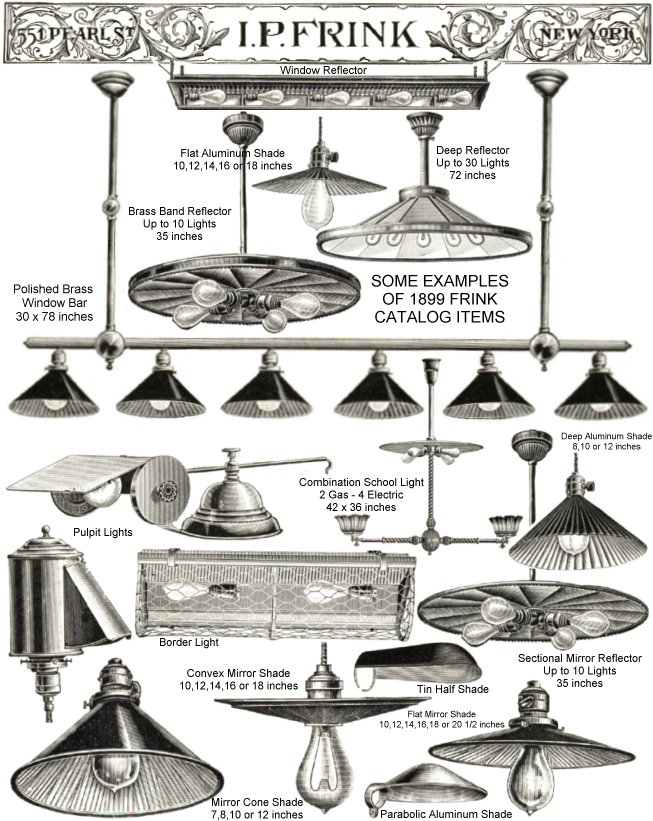
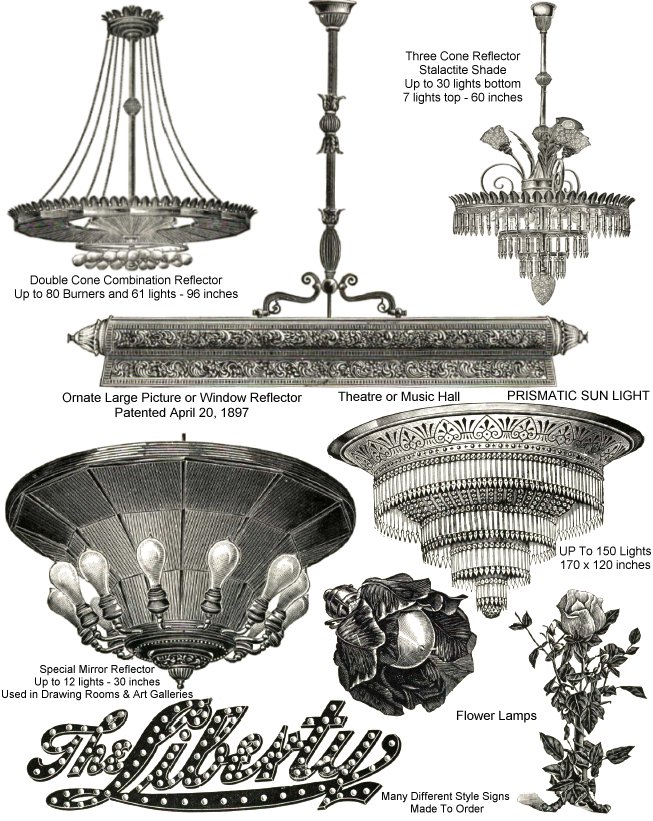
Click
here (and then back on your browser) to see some small Frink
reflectors (above on this page) that were added in the 1898 Manhattan
Electrical Supply Company catalog, or a small write up on Frink
and Wheeler here.
See a demo of the
1899 I.P. FRINK Catalog
(or if you would like more information about it for trading
or to purchase a full copy of of it click
here)
|
FIXTURE
STYLES FROM THE 1900's
|
TO
CONTINUE TO THE NEXT SECTION CLICK BELOW
http://antiquesockets.com/lighting-timetable4.html
|